Discover the Ancient, Affordable, and Eco-Friendly Way to Clean Your Teeth
I don’t know about you, but I find nature absolutely awe-inspiring. These days, it feels like my church and sanctuary. A walk in the woods — especially now, with the leaves turning — is a gentle reminder that life on Earth can still be peaceful and beautiful. My heart fills with gratitude and love for this world God created for us.
Yes, we’ve certainly misused and neglected our beautiful Mother Earth, but there is still so much to learn, appreciate, and respect.
One small thing I love: birch tree twigs have been used for centuries — and are still used today — for cleaning and brushing teeth. Since I’m on a mission to improve my gum and dental health, I thought I’d share a natural alternative for brushing your teeth. It might even save you a few bucks in the long run.
While some may view it as using a precious resource, birch twigs offer a sustainable option — they’re fully biodegradable and can help reduce the number of plastic toothbrushes ending up in landfills.
Long before the invention of modern toothbrushes and toothpaste, people around the world turned to nature for dental hygiene tools. One such traditional tool is the birch twig, used for centuries to clean teeth, freshen breath, and promote oral health. While it may seem unconventional by today’s standards, the birch twig is a time-tested and eco-friendly alternative still used in various cultures today.

A Brief History
The practice of using twigs to clean teeth dates back thousands of years. In ancient civilizations — such as Egypt, Babylonia, Greece, and India — people would chew the ends of specific twigs to create a frayed brush-like texture and use them to scrub their teeth. Among the many trees used, birch held a special place in northern Europe due to its abundance, antimicrobial properties, and mild flavor.
Why Birch?
The young twigs are sturdy yet flexible. When cut to about three inches long and soaked in water, the ends become soft and suitable for brushing. Chewing on the end helps release the natural oils, which can aid in oral hygiene.
Using birch twigs is straightforward. Just take a twig, chew one end until it softens, and then use it to scrub your teeth gently. The fibrous texture helps remove food particles and plaque, promoting fresh breath and healthier gums.
If you’ve followed the Outlander series by author Diana Gabaldon, you might recall that Claire mentions using birch twigs several times as a way to clean their teeth.
Birch Trees vs Aspen Trees- How to Tell Them Apart
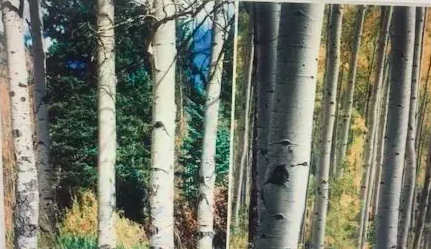
It’s easy to mistake birch trees for aspen trees. From a distance, birch trees on the right, and aspens, on the left, look similar with their slender white or gray trunks. However, looking up close, you’ll see that birches have peeling bark, whereas aspen trees have rough, fissured bark.
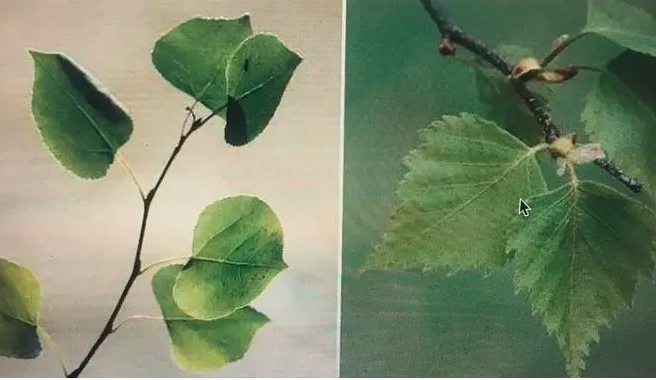
Another way to tell birch trees apart from aspen trees is by their leaves. Birch leaves, on the right, tend to be triangular or spear-shaped with a noticeable serrated margin. Aspen tree leaves, on the left, are more heart-shaped with finely tooth edges. Also, birch leaves have “V” leaves and are elongated rather than like the flat leaves of aspens.