birch tree leaf

Chew on This: Birch Twigs and Natural Oral Care

Discover the Ancient, Affordable, and Eco-Friendly Way to Clean Your Teeth

I don’t know about you, but I find nature absolutely awe-inspiring. These days, it feels like my church and sanctuary. A walk in the woods — especially now, with the leaves turning — is a gentle reminder that life on Earth can still be peaceful and beautiful. My heart fills with gratitude and love for this world God created for us.
Yes, we’ve certainly misused and neglected our beautiful Mother Earth, but there is still so much to learn, appreciate, and respect.
One small thing I love: birch tree twigs have been used for centuries — and are still used today — for cleaning and brushing teeth. Since I’m on a mission to improve my gum and dental health, I thought I’d share a natural alternative for brushing your teeth. It might even save you a few bucks in the long run.
While some may view it as using a precious resource, birch twigs offer a sustainable option — they’re fully biodegradable and can help reduce the number of plastic toothbrushes ending up in landfills.
Long before the invention of modern toothbrushes and toothpaste, people around the world turned to nature for dental hygiene tools. One such traditional tool is the birch twig, used for centuries to clean teeth, freshen breath, and promote oral health. While it may seem unconventional by today’s standards, the birch twig is a time-tested and eco-friendly alternative still used in various cultures today.


A Brief History

The practice of using twigs to clean teeth dates back thousands of years. In ancient civilizations — such as Egypt, Babylonia, Greece, and India — people would chew the ends of specific twigs to create a frayed brush-like texture and use them to scrub their teeth. Among the many trees used, birch held a special place in northern Europe due to its abundance, antimicrobial properties, and mild flavor.

Why Birch?

The young twigs are sturdy yet flexible. When cut to about three inches long and soaked in water, the ends become soft and suitable for brushing. Chewing on the end helps release the natural oils, which can aid in oral hygiene.
Using birch twigs is straightforward. Just take a twig, chew one end until it softens, and then use it to scrub your teeth gently. The fibrous texture helps remove food particles and plaque, promoting fresh breath and healthier gums.
If you’ve followed the Outlander series by author Diana Gabaldon, you might recall that Claire mentions using birch twigs several times as a way to clean their teeth.

Birch Trees vs Aspen Trees- How to Tell Them Apart

It’s easy to mistake birch trees for aspen trees. From a distance, birch trees on the right, and aspens, on the left, look similar with their slender white or gray trunks. However, looking up close, you’ll see that birches have peeling bark, whereas aspen trees have rough, fissured bark.
aspen and birch trees in the forest
aspen trees on the left, and birch on the right
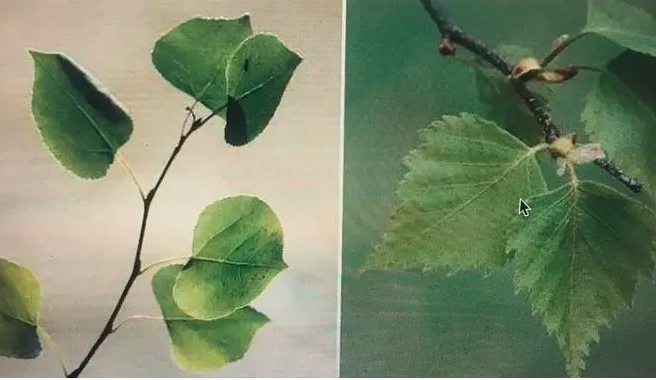
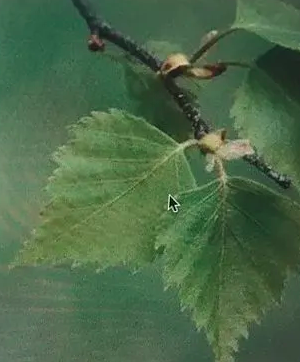
Another way to tell birch trees apart from aspen trees is by their leaves. Birch leaves, on the right, tend to be triangular or spear-shaped with a noticeable serrated margin. Aspen tree leaves, on the left, are more heart-shaped with finely tooth edges. Also, birch leaves have “V” leaves and are elongated rather than like the flat leaves of aspens.
aspen and birch leaves
aspen leaf on the left, birch leaf on the right

The birch tree offers several qualities that make it particularly effective for oral hygiene:

Antibacterial Properties: Birch twigs contain natural compounds such as betulin and betulinic acid, which have mild antimicrobial effects. This helps reduce oral bacteria and prevent plaque buildup.
Xylitol Source: Birch trees are a natural source of xylitol, a sugar alcohol that has been shown to reduce cavity-causing bacteria and promote remineralization of tooth enamel.
Mild Flavor and Texture: The twigs are relatively soft, especially when freshly cut, making them gentle on your gums. They also have a neutral to slightly sweet flavor, which is more pleasant than many other tree species.

How It’s Used

1. Select a Fresh Twig: Choose a young, healthy twig roughly the thickness of a pencil.
2. Remove the Bark: Strip about an inch of bark from one end.
3. Chew the End: Gently chew the exposed end until it frays into bristles.
4. Brush Teeth: Use the frayed end to scrub the teeth and gums in a circular motion.
5. Trim and Repeat: After a few uses, trim the used end and repeat the process.

Other Sources

This brushing tool is also known in some cultures as a chewing stick or miswak, though miswak typically refers to twigs from the Salvadora persica tree.
Herbalist Doug Simons also shares his lifelong wisdom on using plants — like birch — for healing gums and maintaining oral health.

Environmental and Practical Benefits

Zero Waste: Birch twigs are biodegradable and require no manufacturing, packaging, or plastics.
Portable and Accessible: They can be used anywhere, without toothpaste or water.
Sustainable: When harvested responsibly, birch twigs offer a renewable oral care solution.

Present-Day Value

As interest in natural and zero-waste lifestyles grows, traditional dental tools like birch twigs are gaining renewed attention. While they may not replace modern dental products entirely, they can complement them or serve as a sustainable option for travel, camping, or emergencies.

Final Thoughts

Did you know that birch also symbolizes rebirth, fresh starts, new beginnings, good luck, healing, protection, and cleansing?
The birch twig is a powerful example of how nature offers simple, effective solutions for both physical health and spiritual well-being. While it’s not a replacement for regular dental check-ups or modern treatments when needed, incorporating birch twigs into your routine can be a meaningful way to connect with ancient traditions — and care for your smile in a natural, holistic way.
Thanks for reading.

You Also Might Enjoy:

Connect With Our Community

Come join the conversation and connect with others on a similar journey. Join our Facebook community, Holistic Dental Care Home Remedies, where over 3,100 members share home remedies, herbal wisdom, and practical tips for healthier gums and teeth.
Scroll to Top