
The Real Wilderness
The Plains Indians traditionally marked the passage from childhood to adulthood through a wilderness experience often called a vision quest. The purpose was simple: step away from the distractions of daily life and look inward.
This story is about ten teenage girls who were given a similar opportunity in the rugged Chiricahua Mountains of southern Arizona.
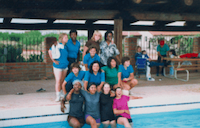
The girls were participants in a wilderness therapy program called Vision Quest. Most came from difficult backgrounds and had spent far more time navigating city streets than mountain trails. For three months they had trained for this expedition—learning outdoor skills, building endurance, and preparing for a ten-day backpacking journey designed to challenge them physically and emotionally.
Their assignment was straightforward but far from easy: hike the miles, spend time alone in the wilderness, and begin asking themselves why they made the choices they did.
I was one of five staff members who accompanied them.
By early May, the Chiricahuas were already warming beneath a brilliant desert sky. Our first goal was a food cache twelve miles ahead. It sounded simple enough, but the combination of heavy packs, empty stomachs, and unfamiliar terrain quickly took its toll.
Arguments Erupted
Complaints became constant.
Progress slowed to a crawl.
Among the girls was twelve-year-old Beth.
With her cropped brown hair, stocky build, and slight scar beside her lip, Beth stood out immediately. She seemed perpetually unhappy. She hid other girls’ belongings, interrupted conversations, and often acted younger than her age. I’ll admit she wasn’t one of my favorites.
Less than a mile into the trip, she began complaining.
“My feet hurt.”
They would continue hurting for many miles.
Like several of the girls, Beth was badly out of shape. What I didn’t know then was that beneath her irritating behavior was a frightened child who had spent years protecting herself the only way she knew how.
By evening, we still hadn’t reached the food cache. We pitched blue tarps on a ridge overlooking a broad valley and settled in for the night. The girls fell asleep hungry, angry, and disappointed.
The next morning dawned clear and warm. Birds called from the pines as everyone packed sleeping bags and loaded their gear.
A Sharp Descent
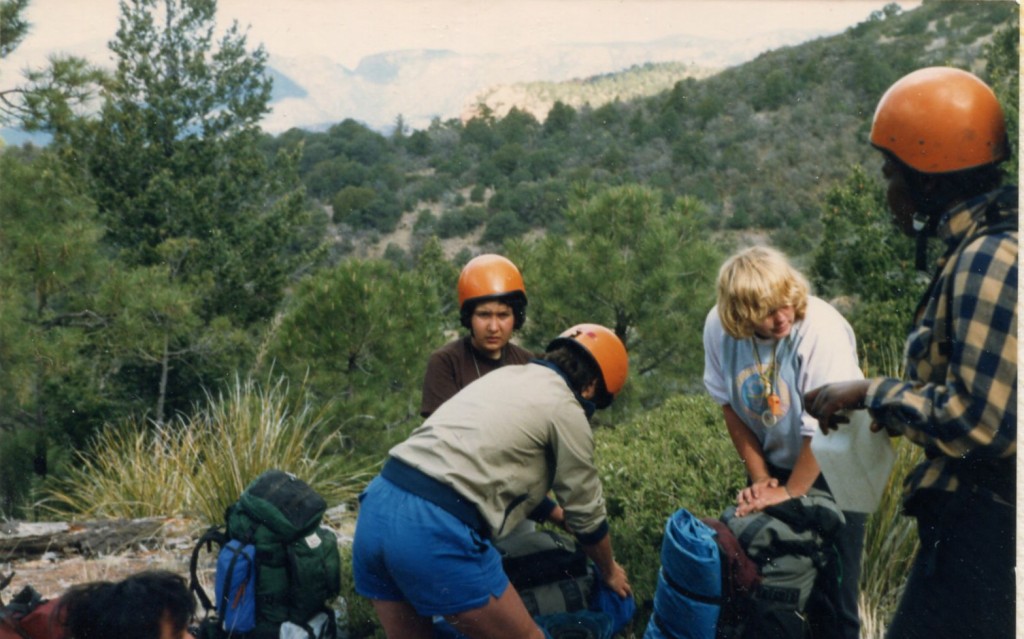
The trail dropped nearly two hundred feet down a rocky mountainside. Before beginning, the girls pulled helmets from their packs.
“Listen up,” I called. “The safest way down is to face uphill and back down slowly. Use the branches beside the trail like a handrail. Staff will be stationed along the route. Take your time.”
Most of the girls nodded.
Beth wasn’t convinced.
“I can’t do this,” she whispered.
“Yes, you can,” I said firmly. “You’ve watched everyone else. One step at a time.”
Reluctantly, she grabbed a branch and began inching downward.
Then her helmet slipped over her eyes.
“I can’t see!”
Her hands flailed wildly as she lost her footing and tumbled down the dusty slope.
My heart stopped.
Fortunately, June, another staff member stationed below, caught her before she could gain momentum.
“Whoa, girl. I’ve got you.”
Shaken but unhurt, Beth clung to June’s arm the rest of the way down.
Only after they reached the bottom did I finally exhale.
A few hours later we found the food cache tucked beneath a grove of mesquite trees.
The girls cheered.
Within minutes, spaghetti, soup, bread, and brownies disappeared as if they had never existed.
It had taken nearly a day and a half to travel twelve miles, but something important had begun happening. The girls were discovering that survival in the wilderness required more than endurance.
It required teamwork.
Solo Time
The next phase of the expedition was called Solo Time.
For three days, everyone—including staff—would spend time alone. Each girl was given a tarp, cheese, nuts, fruit, and carrots. Boundaries were established, and although the girls remained within sight of one another and the staff, they were not allowed to talk.
For many of them, sleeping beneath the stars with nothing but a tarp overhead and a sleeping bag beneath them was intimidating. Gail, a tall girl from Philadelphia, was so nervous that she wore her long underwear for all three days, despite temperatures climbing well above ninety degrees.
I visited each girl once a day. Most admitted they enjoyed being away from the constant conflicts and distractions. The solitude gave them time to think, and that was the whole purpose.
On the second morning, I stopped by Beth’s campsite.
She greeted me with a grin from ear to ear. Her brown hair was matted with sweat and dust, and dirt streaked her neck and cheeks.
“How are you doing this morning, Beth?” I asked.
“You know, it’s not so bad out here when I compare it to my home life.”
I was surprised. This wasn’t the complaining, attention-seeking girl I’d met on the trail.
She looked down at the ground for a moment before speaking again.
“All my life I’ve been told I was stupid. My dad even hit me with a crowbar once. That’s how I got this scar on my lip.”
My heart sank.
“I figured out that if I acted dumb, people left me alone. So that’s what I did. And it worked.”
She paused.
“All I ever wanted was attention from my family, but they were always too busy. When they found out about this program, they signed me up so fast I couldn’t believe it. Every summer they sent me away somewhere—to camp or to relatives. I always felt like I was in the way.”
A tear slipped down her cheek.
Then her expression softened as she looked out across the mountains.
“But sleeping out here under the stars feels different. I feel peaceful. Like God is watching over me and everything is going to be okay.”
“Everything is going to be okay,” I said quietly.
I reached over and hugged her, brushing a strand of hair from her face. For a few moments, neither of us spoke.
Finally, Beth broke the silence.
“I know I’ve given you a hard time. I don’t always know how to act. But I’m going to try harder. I want to treat you and the other girls better.”
I smiled.
“I’ve made plenty of mistakes in my life too. Life is a learning process. Every day gives us another chance to grow. There’s a saying I’ve always liked: ‘Today is the first day of the rest of your life.’ Every morning is a fresh start.”
“I like that,” she said.
Something shifted in Beth that day.
For the first time, she seemed comfortable being herself. The walls she’d built around her began to come down, and she became noticeably kinder and easier to be around.
A River and a Fresh Start
The three-day solo ended with a celebration feast of vegetable soup, chili, blueberry muffins, and lemon angel food cake.
The next morning, everyone packed camp in noticeably better spirits. About a mile down the trail we came upon a clear, rushing stream.
No one had bathed in more than a week.
Backpacks and shoes flew off in every direction as the girls splashed into the cold water. Laughter echoed through the canyon. Faces that had been dusty and tired for days suddenly came alive.
The girls washed their hair, scrubbed away the grime, and emerged looking transformed—not just physically, but emotionally as well.
It was the perfect preparation for their final challenge.

The Trust Game
The last rite of passage was called the Trust Game.
In a remote canyon surrounded by massive boulders, eight girls stood facing one another in two lines. They extended their arms and interlocked hands, creating a human basket.
One at a time, each girl climbed onto a slightly elevated rock and fell backward into the waiting arms of her teammates.
The canyon filled with nervous laughter and shrieks.
Trust did not come easily for these girls. Many had spent their entire lives believing they could rely only on themselves.
Yet every girl was caught.
Every set of arms held firm.
With each fall, confidence grew.

Back at the wilderness lodge, family members, staff, and participants gathered in a large circle for a closing ceremony. A talking stick was passed from person to person, giving everyone an opportunity to share what they had learned.
When the stick reached Beth, she stood and took a deep breath.
“I never realized we were all in this together,” she said. “The success or failure of this trip depended on how we treated each other. We had to be a team or it wasn’t going to work.”
She smiled toward June.
“I learned that when my helmet fell over my eyes and I tumbled down the mountain. I was terrified, but June was there to catch me.”
Then she paused.
“Being alone for three days also made me realize how I treat other people. I now understand that the real wilderness isn’t out here.”
She placed a hand on her chest.
“The real wilderness is inside me. But I’ve learned that it’s okay to be myself.”
In that moment, I realized that the mountains had given Beth exactly what they were meant to give—a chance to see herself differently.
And perhaps, for the first time in her young life, she believed she was worth finding.
If You Go:
If you’ve never visited the Chiricahua Mountains in southeastern Arizona, put them on your bucket list.
Why Visit
Incredible volcanic rock pinnacles
Scenic hiking trails
Birdwatching
Dark skies for stargazing
Rich Apache history
One of Arizona’s famous Sky Islands
Don’t Miss
Massai Point
Echo Canyon Loop
Heart of Rocks Trail
Bonita Canyon
Nearby Cave Creek Canyon for birding